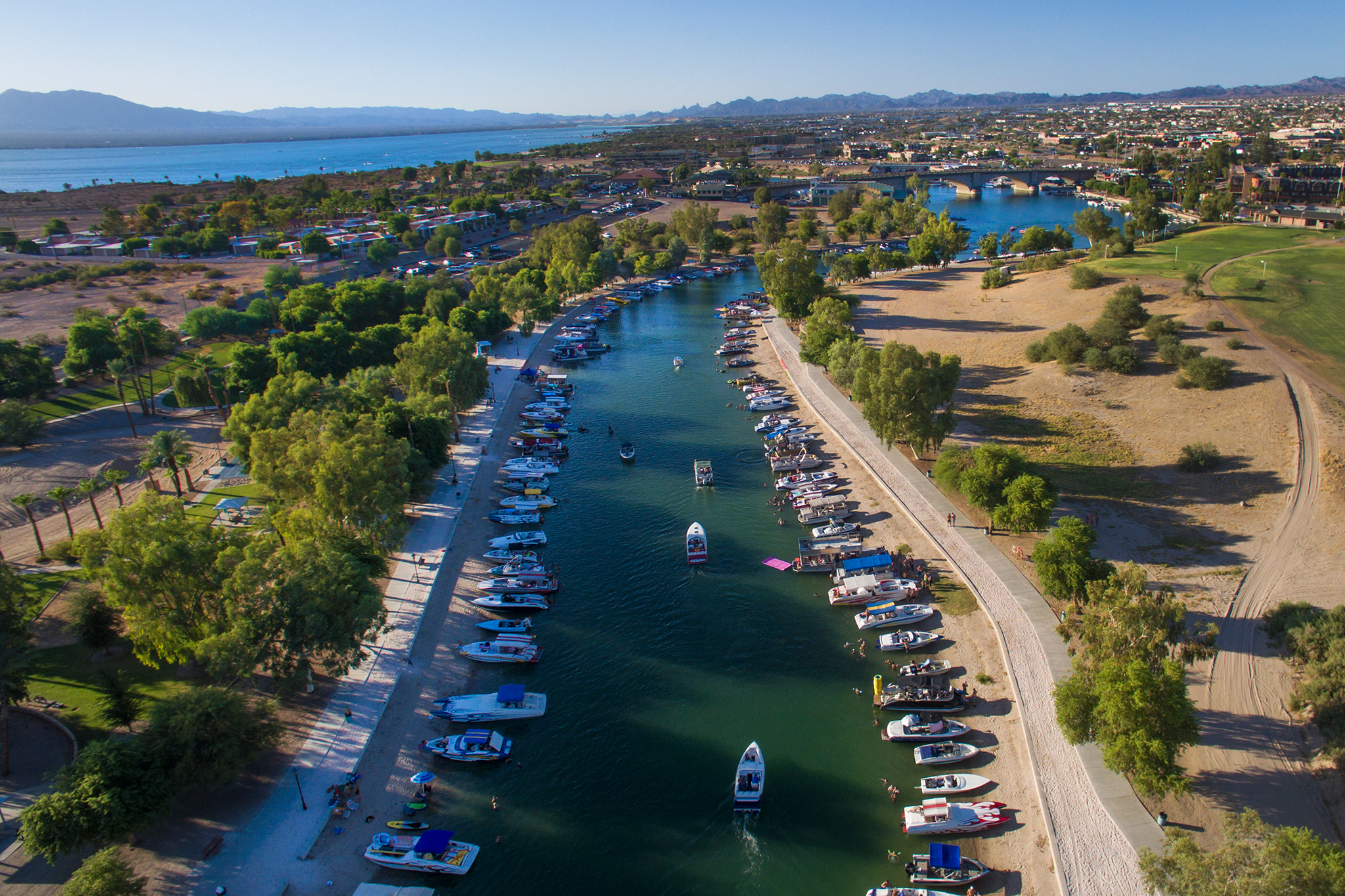
Parker Dam holds Lake Havasu between 445 and 450 feet so the Colorado River Aqueduct and the Central Arizona Project can draw water. The lake stays near full while Mead and Powell hit record lows, and federal analysis expects Havasu and Mohave elevations to hold under all alternatives.
Colorado River · U.S. Bureau of Reclamation
Lake Havasu
Parker Dam · 0.62 MAF capacity at full pool
Loading live data
Loading map…
About Havasu
Lake Havasu sits behind Parker Dam on the lower Colorado River, along the Arizona–California border. It is the diversion forebay for the Central Arizona Project and the Metropolitan Water District of Southern California.
Parker Dam was completed in 1938 and is operated by the U.S. Bureau of Reclamation. Most water leaving Havasu enters either the CAP canal eastward into Arizona or the Colorado River Aqueduct westward into California, with the remainder continuing down the Colorado.
Daily storage, elevation, and release values come from the USBR Reclamation Information Sharing Environment (RISE). Lake Havasu does not have federally codified shortage tiers, so AZMap presents a percent-of-capacity readout.
Recent coverage
Coverage from federal agencies and named news outlets. AZMap is not the publisher.
- Why Havasu, Colorado River's party lake, can't run out of water
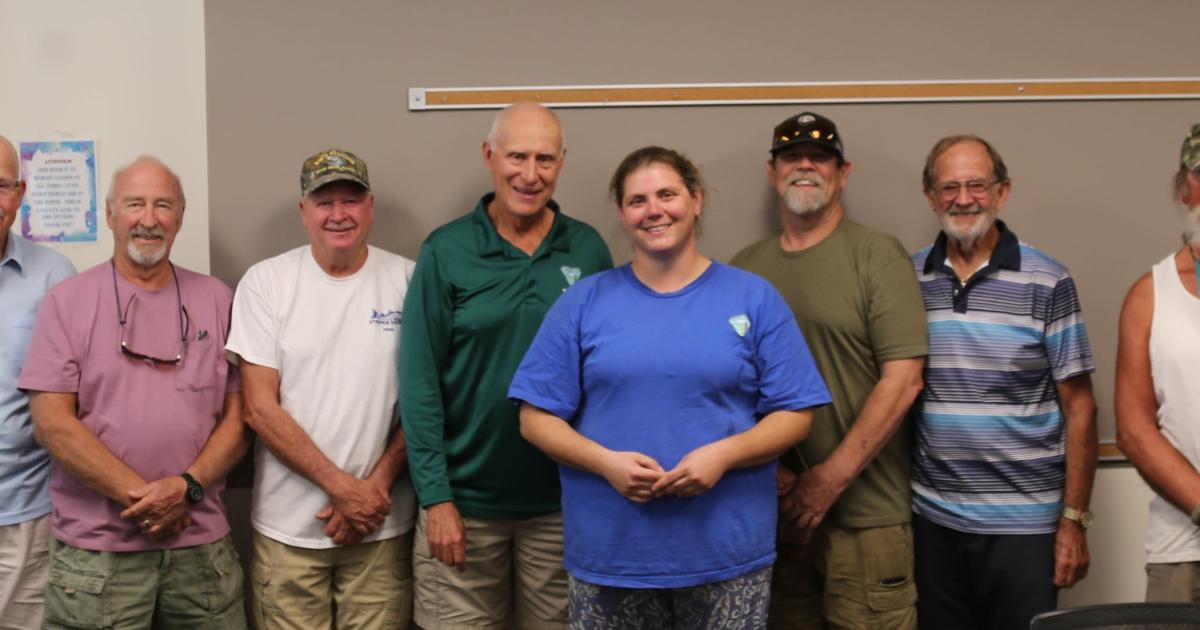
- Hooked on stewardship: Lake Havasu Field Office celebrates Fisheries Improvement Program volunteers
BLM's Lake Havasu Field Office held an appreciation luncheon for seven Fisheries Improvement Program volunteers who logged nearly 2,000 service hours in 2025. So far in 2026, the crew has installed about 100 habitat bundles in the lake and logged nearly 450 hours.