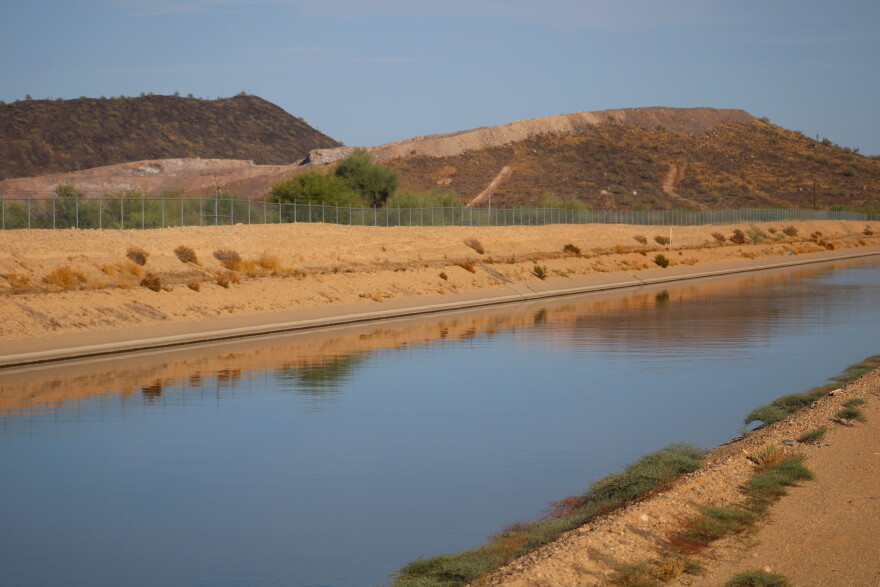
The Central Arizona Project board voted to open the door to litigation over federal management of the river, objecting to a plan that cuts Arizona's supply while not requiring reductions from upstream states. CAP says the framework violates the Colorado River Compact.
Colorado River · U.S. Bureau of Reclamation
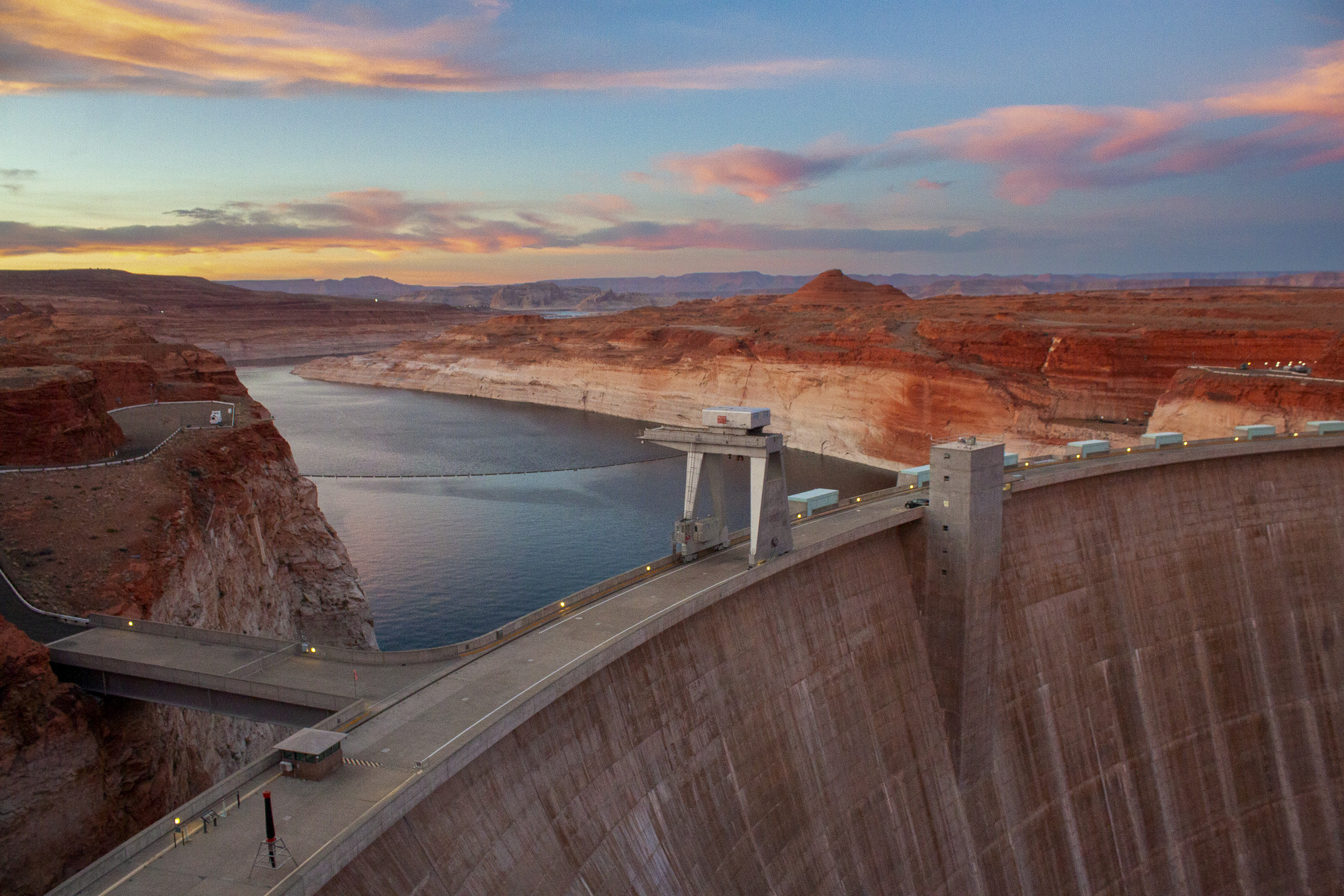
Lake Powell
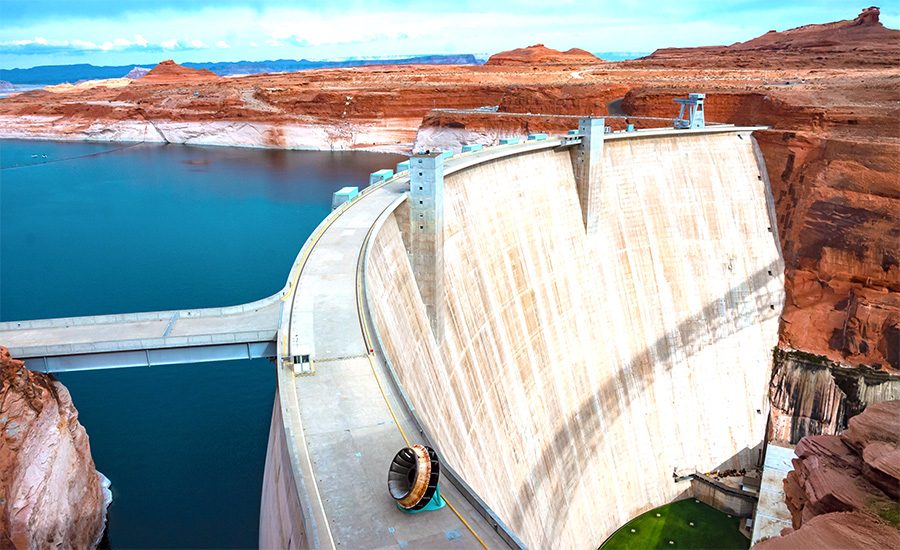
Glen Canyon Dam · 24.32 MAF capacity at full pool
Loading live data
Loading map…
About Powell
Lake Powell sits behind Glen Canyon Dam on the Colorado River, straddling the Arizona–Utah border in Glen Canyon National Recreation Area. It is the second-largest reservoir in the United States by maximum capacity.
Glen Canyon Dam was completed in 1963 and is operated by the U.S. Bureau of Reclamation as part of the Colorado River Storage Project. The reservoir's primary role is to store Upper Colorado Basin water for delivery downstream to the Lower Basin states.
Daily storage, elevation, and release values come from the USBR Reclamation Information Sharing Environment (RISE). Operating tier reference elevations follow the 2022 Drought Response Operations Agreement, with the DROA target at 3,525 feet, minimum power pool at 3,490 feet, and dead pool at 3,370 feet.
Recent coverage
Coverage from federal agencies and named news outlets. AZMap is not the publisher.
- CAP leaders take a step toward legal action over Arizona's Colorado River water share
- Interior Department Finalizes Plans for 2027-2028 Colorado River Operations
The August 2026 24-Month Study puts Lake Powell in the Lower Elevation Infrastructure Protection Range for water year 2027, starting between 3,540 and 3,510 feet with an expected release of 6.0 to 7.0 million acre-feet. The final volume is set in April.
- A new Colorado River plan is here — and Arizona will take the biggest water cuts
The plan aims to hold Lake Powell above 3,510 feet so Glen Canyon Dam can keep generating hydropower. Arizona, California and Nevada give up about 20% of their supply a year through 2028, with Arizona taking the largest share at 760,000 acre-feet.
- Lake Powell hits record low, threatening key water and electricity supply for millions
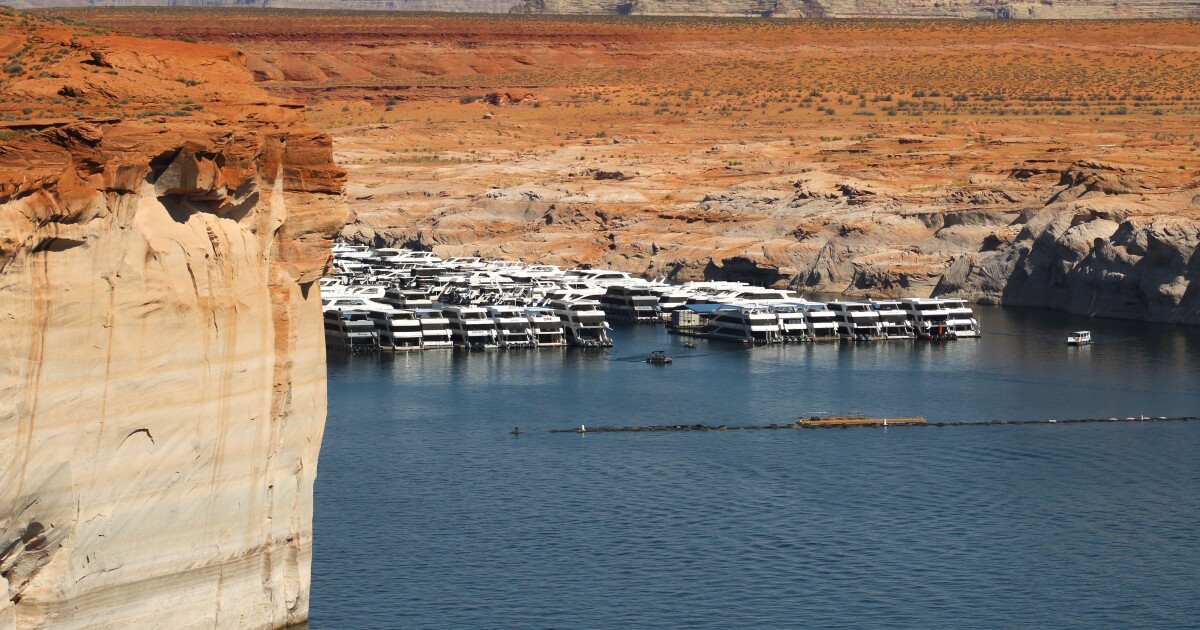
Lake Powell fell to 3,519.91 feet on Saturday, Aug. 15, below the record of 3,519.92 feet set in April 2023. The reservoir is about 22% full and roughly 30 feet above the minimum power pool where Glen Canyon Dam turbines stop generating.
- Reclamation Publishes Final Environmental Impact Statement for Future Colorado River Operations
Reclamation's Final Environmental Impact Statement sets sideboards for operations through 2036: Lake Powell releases of 5.0 to 12.0 million acre-feet a year and Lower Basin shortages of up to 3.0 million acre-feet. Operating guidelines will be issued at roughly two-year intervals.
- There's a new plan for Colorado River water after years of negotiations. Here's what to know
The Interior Department's final plan sets a 10-year framework for Lake Powell and Lake Mead that is revisited every two years. Lower Basin states face combined cuts of 1.25 million acre-feet in 2027 and 2028, and new release rules take effect Oct. 1 with a Record of Decision.
- The Colorado River's biggest reservoirs are in 'uncharted territory' after new record low
Lake Powell and Lake Mead together hold less water than at any point since May 1957, before Powell was built, according to a new paper from Colorado River researchers. Jack Schmidt of the Center for Colorado River Studies said the basin is in uncharted territory as state talks stay stalled.
- Lake Powell reaching critically low elevation levels, nearing 'dead power pool,' experts say
Lake Powell sat at 3,524.3 feet, about 34 feet above the 3,490-foot minimum power pool where Glen Canyon Dam turbines stop generating. Reclamation's Peter Soeth cited the lowest snowpack on record, and researcher Jack Schmidt said the reservoir has lost about 4,800 acre-feet per day since June 1.
- Federal officials dispute fears over Glen Canyon Dam as Lake Powell concerns grow
Interior Department officials disputed "false narratives" about Glen Canyon Dam's backup river outlet works at a congressional hearing, saying the tubes can run with added inspections. Reclamation plans a dam modification appraisal study covering three alternatives by end of 2026 or early 2027.
- Lake Powell expected to receive 13% of its usual influx of water
A May 9 federal forecast projected Lake Powell would receive only 13% of its normal spring runoff, the lowest inflow on record. The reservoir held 23% of capacity, and Reclamation projected hydropower at Glen Canyon Dam could halt as soon as September without emergency action.
- Glen Canyon Dam Faces Its Existential Moment
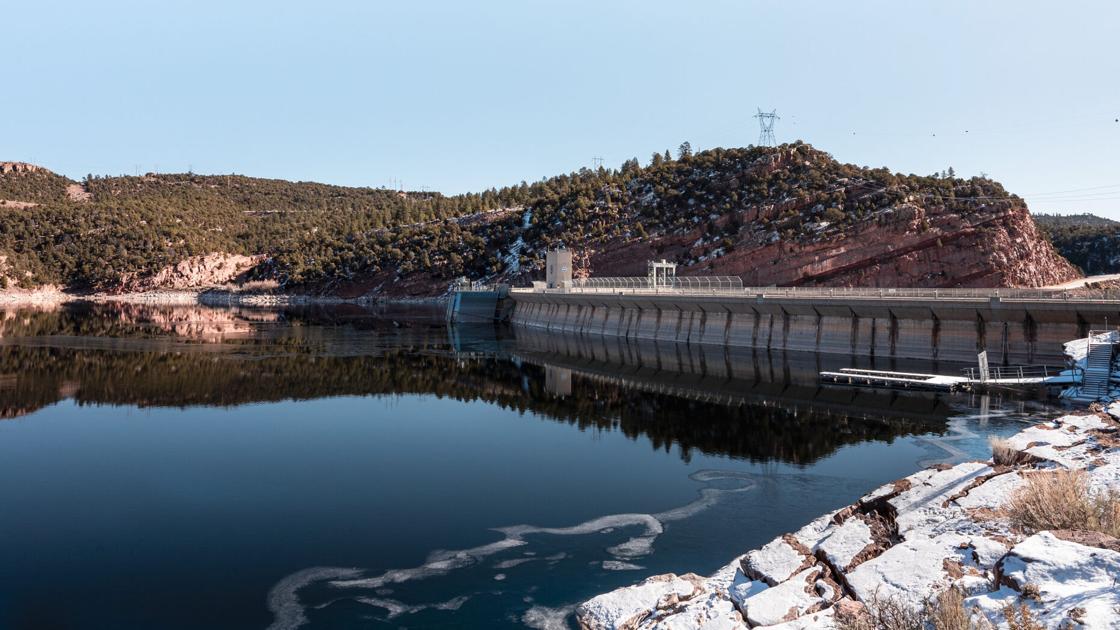
Lake Powell was 25% full in late April 2026 and projected to hit a record low within 12 months. Reclamation cut releases to the legal minimum and began releasing extra water from Flaming Gorge to delay the dam reaching 3,500 feet, where infrastructure risks to downstream deliveries escalate.
- Colorado River States Clear Emergency Water Transfer as System Nears Hydropower Floor
Upper Basin states approved the Flaming Gorge emergency transfer on April 23, clearing Interior Secretary Burgum to authorize releases roughly double those of a 2022 emergency. April modeling projected Powell's end-of-year elevation at 3,483 feet, 7 feet below the 3,490-foot minimum power pool.
- U.S. to drastically alter Colorado River releases, Arizona officials warn
The federal government plans to cut Colorado River releases from Glen Canyon Dam and boost upstream inflows from Flaming Gorge to keep Lake Powell above the 3,490-foot minimum power pool threshold. Lake Powell was at roughly 24% capacity in late April 2026.
- Reclamation Acts to Protect Colorado River System During Unprecedented Drought
Reclamation cut Lake Powell's annual release from 7.48 to 6.0 million acre-feet through September 2026 and plans to release up to 1 million acre-feet from Flaming Gorge by April 2027. Without action, April 2026 projections showed Powell falling below the 3,490-foot minimum power pool by August.
- Lake Powell forecast to reach critical lows, threatening hydropower generation
The February 2026 federal 24-Month Study projected Lake Powell could fall to 3,497 feet by September, near the 3,490-foot minimum power pool threshold at Glen Canyon Dam. Federal managers began holding water in the reservoir and weighing emergency upstream releases to protect hydropower generation.
- At Lake Powell, Engineering Is Outpacing Colorado River Policy
Lake Powell dropped roughly 36 feet between December 2024 and December 2025, compressing the operating margin at Glen Canyon Dam. Basin states have yet to agree on post-2026 rules, leaving engineers designing around physical constraints rather than finalized policy.